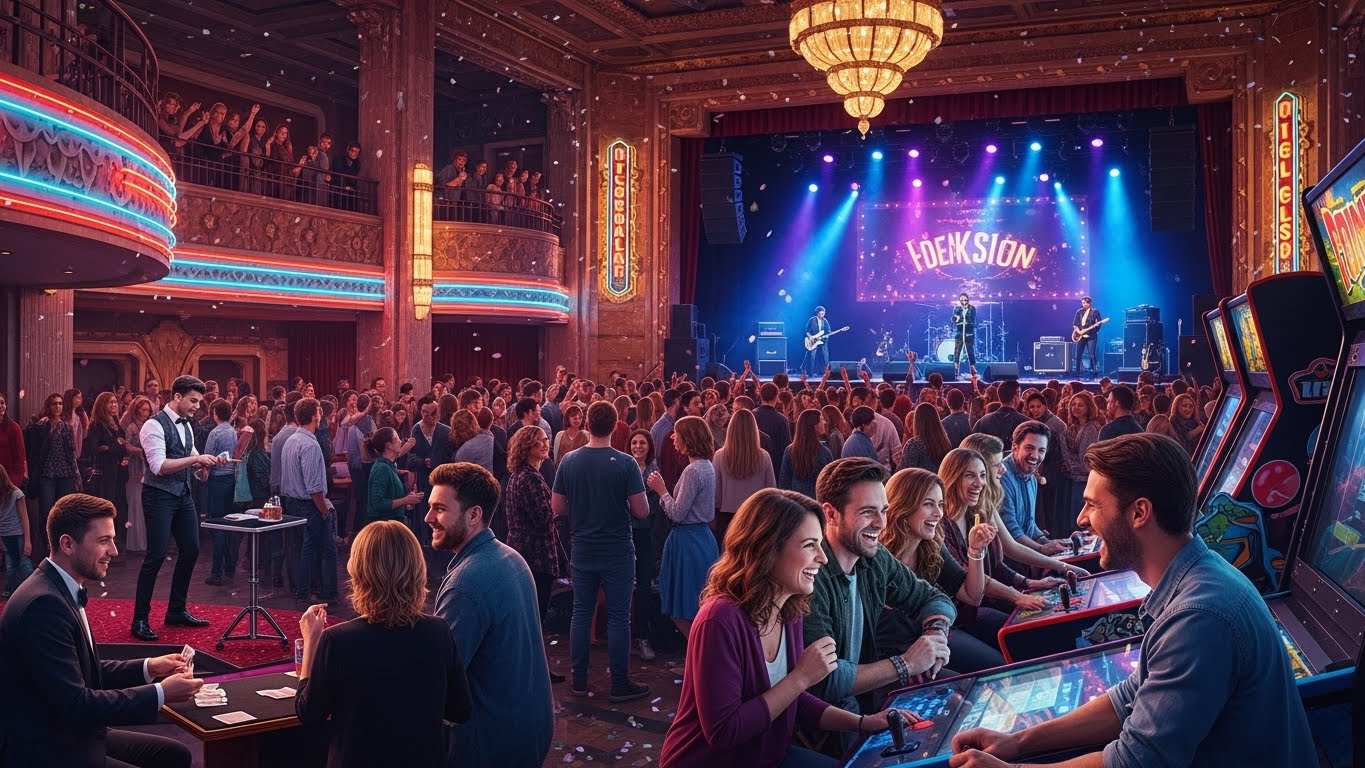

Entertainment has been an inseparable part of human life since the dawn of civilization. From the rhythmic beats of ancient drums to the dazzling world of digital streaming, entertainment continues to evolve, reshape, and redefine the ways people connect with each other and themselves. It serves as both a mirror and an escape, reflecting the truths of society while allowing people to drift away from them, even for a fleeting moment. In this vast and colorful realm, everything from music and movies to games and live performances plays a role in shaping culture, emotions, and imagination.
The Ancient Roots of Entertainment
Long before television screens, smartphones, and concert halls, entertainment lived in the voices and movements of our ancestors. Storytelling was one of the earliest forms of amusement and education combined. Around campfires, people would share tales of bravery, mystery, and the supernatural. These stories not only entertained but also preserved the traditions, beliefs, and wisdom of the tribe. Music too played a central role. Primitive instruments like hollow logs, animal skins, and bones were used to create rhythms that celebrated harvests, honored gods, or marked battles. Dance emerged alongside music as a form of expression that communicated emotions beyond words. In ancient Egypt, performances were part of religious ceremonies. In Greece, theatre was not just a pastime but a spiritual experience. The tragedies of Sophocles and the comedies of Aristophanes spoke to the depths of the human condition in ways still relevant today. Rome added grand spectacle to the mix, with gladiatorial games and chariot races captivating audiences hungry for adrenaline and glory. These early expressions of entertainment laid the groundwork for the creative explosion that would follow through centuries.
The Birth of Performance and the Power of Theatre
Theatre was one of humanity’s first structured entertainment forms, combining story, music, dance, and art. It gave rise to the concept of an audience and performer—two roles that define much of entertainment even today. In Shakespearean England, theatre flourished as a cultural powerhouse. William Shakespeare’s plays not only entertained but also captured the complexities of love, ambition, power, and tragedy in poetic form. Theatres like the Globe became temples of imagination, where both nobles and commoners gathered to experience the drama of life reflected on stage. Theatre taught the world how storytelling could move beyond words into shared experience. This art form inspired countless generations of artists, writers, and actors to pursue performance as a lifelong craft.
The Evolution of Music: Humanity’s Universal Language
If storytelling is the heart of entertainment, then music is its soul. From folk songs sung across mountain valleys to symphonies performed in grand halls, music has the power to unite people across cultures and languages. The evolution of music is a journey through emotion and technology alike. Ancient music relied heavily on rhythm and repetition. As societies developed, so did the instruments and scales used. Classical music, with composers like Bach, Mozart, and Beethoven, introduced structure and sophistication. Every note became a conversation between order and chaos. In the 20th century, music experienced a revolution with the birth of jazz, blues, and rock and roll. These genres gave rise to icons like Louis Armstrong, Elvis Presley, and The Beatles—figures who not only entertained but changed the very fabric of global culture. Today, digital streaming and social media platforms have democratized music, allowing independent artists to share their work instantly with the world. Yet, despite all the changes, the emotional connection remains the same. A melody still has the power to make us cry, dance, or fall in love.
The Golden Age of Cinema
The invention of motion pictures in the late 19th century brought a new dimension to entertainment. What began as silent black-and-white reels evolved into a global phenomenon that defined the 20th century. The early films of Charlie Chaplin and Buster Keaton blended humor with heart, teaching audiences to laugh and feel through the silent gestures of expressive faces. With the arrival of sound in the late 1920s, cinema entered its golden age. Hollywood became the dream factory, producing stars like Humphrey Bogart, Marilyn Monroe, and Audrey Hepburn—figures who would transcend the screen to become timeless cultural icons. Meanwhile, filmmakers like Alfred Hitchcock and Orson Welles redefined storytelling through innovative techniques that still influence directors today. Beyond Hollywood, world cinema flourished too. In India, Bollywood emerged as a vibrant blend of music, drama, and dance, creating stories that resonated deeply with audiences. Italian neorealism, Japanese cinema, and French new wave all contributed unique voices that enriched the language of film. Cinema became more than entertainment—it became art, philosophy, and a collective memory of human experience.
Television: The Living Room Revolution
The arrival of television in the mid-20th century changed entertainment forever. For the first time, people could enjoy performances, news, and drama without leaving their homes. The family living room became a shared space of laughter, suspense, and connection. Shows like I Love Lucy and The Twilight Zone introduced audiences to a new form of storytelling, one that unfolded in episodes, week after week. Television also shaped social consciousness. Broadcasts of historical events, such as the moon landing or civil rights movements, made viewers witnesses to real-time history. Over decades, TV evolved into a platform for creativity and commentary. Sitcoms, soap operas, game shows, and reality TV all offered unique forms of entertainment. The 21st century brought a new revolution—streaming. Platforms now allow viewers to binge-watch entire series in one sitting, changing the way stories are told and consumed. Television may have started as a black-and-white box, but it has become a boundless digital universe.
The Digital Age and the Rise of the Internet
The internet has completely transformed entertainment. It shattered barriers of geography and cost, giving everyone access to limitless content. YouTube, social media, and streaming services like Netflix or Spotify have redefined not just how entertainment is delivered, but who gets to create it. Anyone with a phone and creativity can now become an entertainer, influencer, or artist. The digital era also blurred the line between audience and performer. People no longer passively consume; they interact, comment, remix, and participate. Memes, challenges, and viral videos represent a new form of social entertainment—one that thrives on speed, humor, and connection. Yet, with so much content comes a paradox of choice. While technology makes entertainment more accessible than ever, it also creates a hunger for authenticity. Audiences crave genuine connection amidst the flood of algorithms and filters.
The Role of Sports as Entertainment
Sports represent one of the purest and most universal forms of entertainment. From the Olympic Games of ancient Greece to today’s global tournaments, athletic competition has always captured the human spirit of ambition, teamwork, and perseverance. Sports stars are entertainers in their own right, performing feats of skill that inspire millions. The thrill of a last-minute goal, a record-breaking sprint, or a championship victory brings emotions that transcend language or nationality. Stadiums become theaters, players become heroes, and fans become part of the performance itself. Sports also demonstrate the power of unity. Major events like the FIFA World Cup or the Olympics showcase how entertainment can bring together diverse nations in celebration of shared passion and humanity.
Literature and the Imagination of Words
While visual and digital entertainment dominate today’s landscape, the written word remains a timeless form of amusement and inspiration. Books have the unique ability to transport readers into different worlds through imagination alone. From the epics of Homer and the poetry of Rumi to the novels of Dickens and the fantasies of Tolkien, literature offers endless exploration of emotion and idea. Reading is an intimate act; it allows each person to interpret, visualize, and feel at their own pace. Even in the age of screens, storytelling through books continues to thrive, now joined by audiobooks and e-readers that bring literature into new formats. The joy of reading lies not only in the story but in the act of creation it demands from the reader’s own mind.
The Influence of Gaming: The New Frontier
Video games have emerged as one of the most dynamic and immersive forms of entertainment. What began as simple pixelated challenges has evolved into vast virtual worlds filled with intricate narratives, stunning graphics, and emotional depth. Games today rival movies in storytelling and artistry. Titles like The Legend of Zelda, The Last of Us, and Red Dead Redemption prove that interactive entertainment can evoke profound empathy and reflection. Beyond fun, gaming fosters community and creativity. Online multiplayer games connect millions of players across continents, forming friendships and rivalries that transcend borders. Esports has turned gaming into a professional spectacle, drawing stadium-sized audiences and global recognition. As virtual reality and artificial intelligence continue to develop, the line between gaming and reality grows ever thinner, offering endless possibilities for the future.
Comedy: The Medicine of the Mind
Laughter is one of the oldest and most universal forms of entertainment. From court jesters to stand-up comedians, humor has always served as both relief and rebellion. Comedy reflects society’s absurdities while providing an outlet for shared joy. Great comedians use wit to highlight truths we might otherwise ignore. Shows and stand-up acts entertain while challenging norms, addressing social issues through humor. In difficult times, laughter becomes medicine—a reminder that even in chaos, joy can be found. Comedy continues to evolve through television, internet sketches, and live performances, proving that humor will forever be central to human happiness.
The Business Behind the Magic
Behind every song, movie, or show lies a vast industry of creativity, commerce, and competition. The entertainment business fuels economies, generates jobs, and influences global culture. Producers, writers, designers, and marketers work behind the scenes to bring imagination to life. The evolution of entertainment has also shifted how success is measured—from ticket sales and ratings to views, likes, and shares. Yet, amid these numbers, the true heart of entertainment remains the same: emotion. Whether a blockbuster film or an indie song, success ultimately depends on connection. The audience’s emotional response is the currency that drives this multibillion-dollar world.
The Psychological Impact of Entertainment
Entertainment is not just fun; it is therapy. It shapes moods, thoughts, and behaviors. Movies can inspire dreams, music can heal heartbreak, and games can relieve stress. Psychologists have long studied how entertainment influences the mind. It provides escapism—a way to detach from the pressures of reality—and also offers catharsis, a healthy outlet for emotion. At its best, entertainment reminds people that they are not alone in their experiences. It gives voice to unspoken feelings and makes sense of chaos through rhythm, story, and art. However, balance is key. The digital era’s constant availability of entertainment can lead to overconsumption, which numbs rather than nourishes the soul. Mindful enjoyment ensures that entertainment remains a source of growth rather than distraction.
The Cultural Impact and Global Connection
Entertainment is a universal language. A song written in one country can move hearts across the world. A movie made in a small town can spark global conversation. The internet has made cultural exchange faster than ever before, allowing diverse voices to share their stories. K-pop, anime, and international cinema prove how powerful cross-cultural entertainment can be. Each form carries the flavor of its origin while appealing to shared human emotions. Entertainment breaks barriers, encourages empathy, and reminds humanity of its shared dreams.
The Future of Entertainment: Technology and Imagination
As technology continues to advance, the future of entertainment looks both exciting and unpredictable. Artificial intelligence, augmented reality, and virtual environments are changing how people experience stories. Imagine concerts where holograms perform beside real artists or movies where the viewer can change the ending. Interactive storytelling may soon become the norm, making audiences co-creators rather than spectators. At the same time, there is growing interest in returning to authenticity—live performances, unplugged music, and personal storytelling. The future will likely be a blend of innovation and nostalgia, where the newest tools serve timeless human emotions.
Conclusion: The Infinite Stage of Human Expression
Entertainment, in all its forms, is a celebration of what it means to be human. It is creativity made visible, emotion made audible, and imagination made tangible. Whether through the flicker of a screen, the rhythm of a drum, or the laughter of a crowd, entertainment connects souls across time and distance. It reminds us that life is not just about survival but about experience, joy, and connection. As long as humans continue to dream, there will always be stories to tell, songs to sing, and worlds to create. Entertainment is not just what we consume—it is who we are.