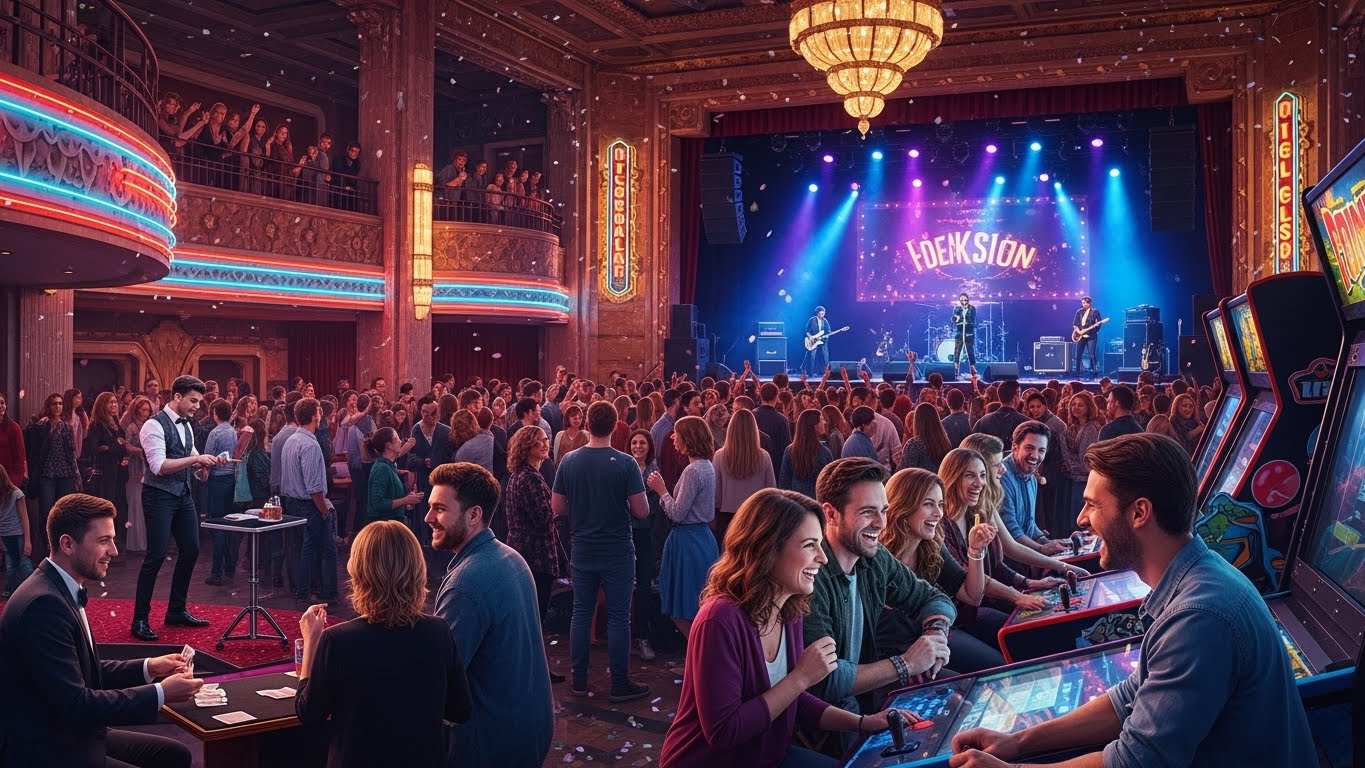

Entertainment has always been a fundamental part of human culture. Whether it’s a gathering around a campfire telling stories, a trip to the theater, or binge-watching a series on a streaming platform, the way we engage with entertainment has transformed dramatically over the centuries. As technology advances and our cultural preferences shift, so too does the nature of entertainment. In this blog post, we will explore the fascinating journey of entertainment, from its traditional roots to its modern digital forms, and how it has become an essential part of our everyday lives.
The Origins of Entertainment: From Storytelling to Stage Performances
Before the advent of modern technology, entertainment was primarily focused on live experiences. The earliest forms of entertainment were rooted in storytelling, music, and physical performances. In ancient times, people gathered around campfires to share stories and myths, which often carried cultural lessons and moral teachings. These stories, passed down through generations, formed the bedrock of early entertainment.
As civilizations grew, the methods of storytelling expanded into more formalized stages. The ancient Greeks and Romans, for instance, held large theatrical performances in amphitheaters where playwrights like Sophocles, Euripides, and Shakespeare’s predecessors brought complex dramas to life. These performances were not just a form of entertainment; they served as a medium to explore themes such as politics, love, morality, and social justice. They also brought communities together in shared experiences, a theme that continues to define entertainment today.
In medieval Europe, entertainment took on a religious and royal tone, with festivals and court performances becoming major cultural events. Musicians, jesters, and dancers were commissioned by kings and queens to provide entertainment for the elite. This early form of entertainment was often extravagant, and the privileged few enjoyed exclusive access to the most talented performers.
The Age of Mass Media: Radio, Television, and the Birth of Pop Culture
By the early 20th century, a revolution in technology reshaped the entertainment landscape. The invention of the radio brought the ability to broadcast music, news, and dramatic performances to households around the world. The radio became the first form of mass media, allowing people to experience entertainment in the comfort of their own homes. The golden age of radio in the 1930s and 1940s featured popular programs like The Lone Ranger and Amos ‘n’ Andy, which reached millions of listeners every week. This marked the beginning of a shift from community-based entertainment to a more individualized experience.
The real transformation came in the mid-20th century with the invention of television. Television combined the visual appeal of theater with the mass accessibility of radio, creating a new form of entertainment that could bring live events, dramas, comedies, and films directly into the living rooms of millions. Shows like I Love Lucy, The Ed Sullivan Show, and later Friends and The Simpsons became cultural touchstones that shaped the collective imagination of entire generations.
Television quickly became the center of American and global pop culture, and it wasn’t long before the influence of the medium reached far beyond entertainment. Advertisers, political campaigns, and even social movements began to recognize the power of television in shaping public opinion. The 1960s and 1970s saw the rise of TV stars and iconic moments that are still referenced in modern pop culture.
The 1980s and 1990s brought another shift with the advent of cable television, allowing for more specialized content and niche programming. Channels like MTV revolutionized the music industry by bringing music videos into mainstream entertainment, while networks like HBO changed the game with premium, uncensored content. The growing diversity of television networks allowed people to find entertainment that suited their specific tastes, from reality shows to sports events, drama series, and cartoons.
The Digital Age: The Internet and Streaming Platforms
The dawn of the internet in the late 20th century marked the beginning of a new era for entertainment. Suddenly, people were no longer dependent on traditional forms of media like television, radio, or even cinema to access content. The internet gave rise to a new wave of entertainment that was not bound by physical limitations or geographical constraints.
One of the most significant developments in the digital entertainment landscape was the rise of streaming platforms. Services like Netflix, Hulu, and Amazon Prime Video offered viewers the ability to watch movies and television shows on-demand, anytime and anywhere. The convenience of streaming revolutionized how we consume entertainment, leading to the decline of traditional cable TV and video rental stores.
Streaming platforms gave rise to a new form of media consumption known as binge-watching, where entire seasons of shows were made available at once, encouraging viewers to consume content in large, uninterrupted blocks. Shows like Stranger Things and The Crown became global sensations thanks to the power of streaming, and these platforms provided a launchpad for many original series that would have never been produced by traditional networks.
But streaming is not the only form of digital entertainment that has risen in the modern era. Social media platforms like YouTube, Instagram, and TikTok have allowed individuals to become content creators, democratizing the process of entertainment production. Today, anyone with a smartphone can create videos, share stories, or stream live content to an audience of millions. This has led to the rise of influencers, vloggers, and gamers who have built entire careers around their online presence. As a result, traditional celebrities now compete with everyday people for audience attention.
The growth of digital gaming has also been a major contributor to the entertainment industry’s evolution. Video games, which were once considered a niche hobby, have now become a multi-billion-dollar industry. The gaming world has expanded beyond consoles, with mobile gaming and virtual reality (VR) creating new interactive experiences. Titles like Fortnite and Minecraft have become cultural phenomena, while eSports has evolved into a competitive industry with live-streamed events and millions of dollars in prize money.
The Rise of Interactive Entertainment: VR, AR, and Immersive Experiences
While digital streaming and gaming have already transformed the entertainment landscape, we are now on the cusp of yet another shift with the rise of immersive technologies like virtual reality (VR) and augmented reality (AR). These technologies promise to take entertainment to new heights by providing entirely new ways to engage with media.
Virtual reality, for instance, offers fully immersive experiences where users can step into a digital world and interact with it in real time. VR gaming, in particular, has taken off, with devices like the Oculus Rift, HTC Vive, and PlayStation VR offering players the chance to experience games in a 360-degree environment. The ability to move, look around, and physically interact with the game world creates a sense of presence that traditional gaming could never achieve.
Augmented reality, on the other hand, overlays digital elements onto the real world. Popularized by apps like Pokémon GO, AR has the potential to transform everything from gaming to shopping, education, and entertainment. Imagine walking through a museum and having historical figures come to life through AR or attending a live concert where digital avatars of the band members interact with the audience.
Both VR and AR are poised to become integral parts of the entertainment industry, with potential applications in everything from live performances and theme parks to education and social interactions. As these technologies mature, we may see entirely new forms of entertainment emerge that blur the lines between the real and digital worlds.
The Globalization of Entertainment: Cultural Exchange Through Digital Platforms
One of the most significant changes in the entertainment landscape in recent years has been the globalization of media. Digital platforms have broken down geographical barriers, allowing entertainment from all corners of the world to reach audiences everywhere. K-pop, for example, has become a global phenomenon, with groups like BTS and BLACKPINK attracting millions of fans worldwide. Similarly, films from Bollywood, anime series from Japan, and telenovelas from Latin America have gained international followings through streaming platforms like Netflix and YouTube.
This globalization of entertainment has allowed for greater cultural exchange and understanding. It has also sparked the rise of fan cultures that transcend national borders, with people from different countries coming together to celebrate their favorite artists, shows, and creators.
Social media platforms, too, have played a key role in this cultural exchange. Platforms like Twitter, Instagram, and TikTok allow fans to interact directly with creators, artists, and celebrities, while also giving them a space to share their own thoughts and reactions to the content they consume. This has led to the formation of global communities based on shared interests, where entertainment is not just consumed but discussed, analyzed, and celebrated in real-time.
The Future of Entertainment: What’s Next?
The future of entertainment is both exciting and unpredictable. As new technologies continue to emerge, the way we consume, interact with, and even create entertainment will continue to evolve. One trend that is already shaping the future is the increasing convergence of different forms of media. For example, interactive films and shows, such as Black Mirror: Bandersnatch, allow viewers to make choices that impact the outcome of the story, blending traditional cinema with elements of video gaming.
Another exciting development is the integration of artificial intelligence (AI) in the creation of content. AI could revolutionize the production of music, film, and television by generating personalized recommendations or even creating entire stories based on data about a viewer’s preferences.
Finally, with the rise of 5G networks and more powerful mobile devices, entertainment will become more portable and accessible. Expect more immersive experiences, faster streaming, and even more seamless integration of AR and VR into everyday life.
Conclusion: Entertainment as a Reflection of Society
Entertainment has always been a mirror of society, reflecting our values, desires, and challenges. From ancient storytelling to modern digital experiences, the way we entertain ourselves has evolved in response to technological advances and cultural shifts. Today, entertainment is more diverse, interactive, and accessible than ever before, providing people with endless ways to connect, learn, and escape.